info@bajajlaw.com
 (619) 525-7005

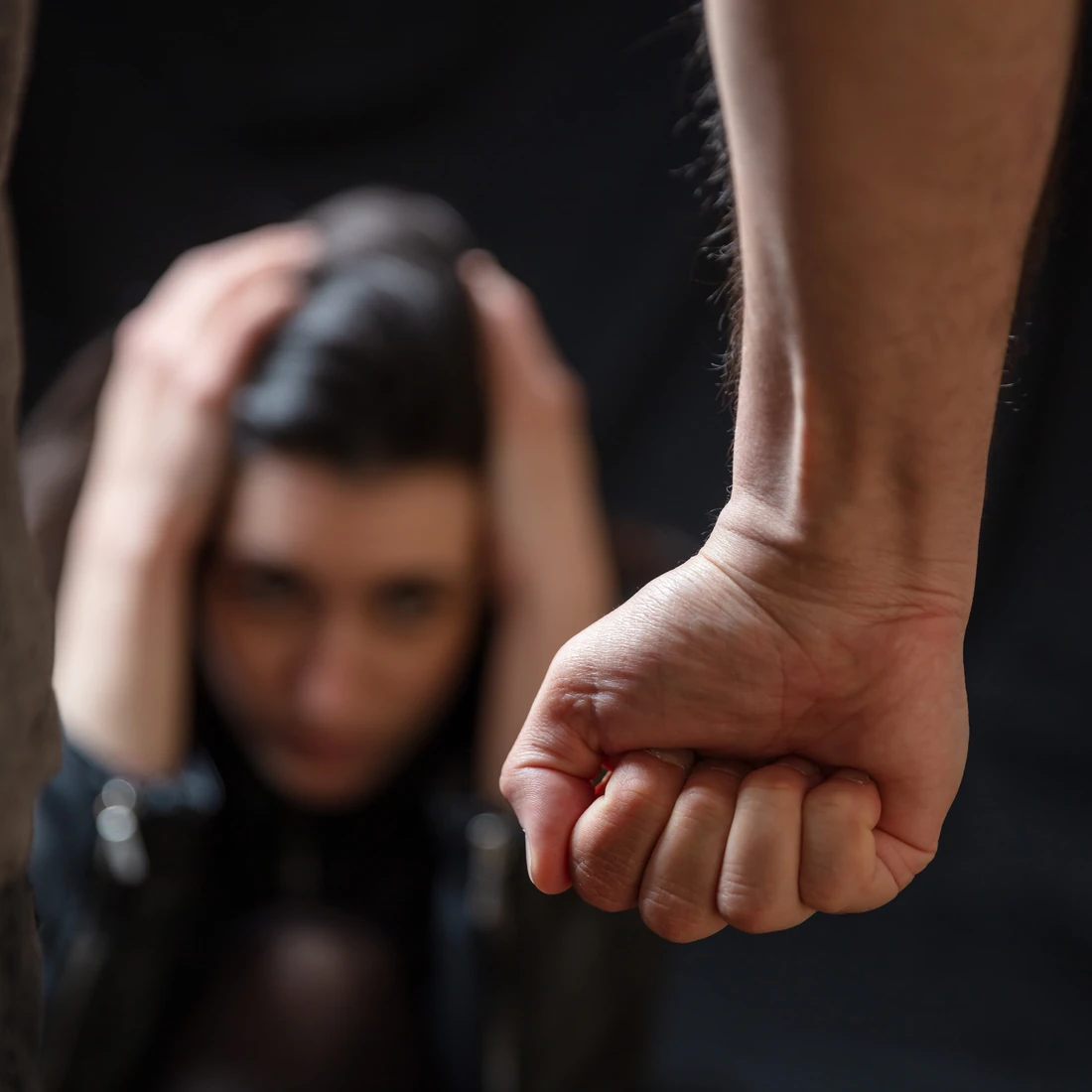
Domestic violence cases in San Diego are usually charged as domestic battery (Penal Code 243(e)(1)) or corporal injury (Penal Code 273.5) and are heard in the San Diego Superior Court. A criminal protective order is often issued at the first court date, and you have to follow it even if the other person contacts you. A civil restraining order is a separate case. A conviction can also affect your right to own firearms under federal law. The Law Office of Vikas Bajaj, APC represents people accused of domestic violence in San Diego.
A domestic violence accusation can bring an arrest, a protective order and sudden separation from home or family within hours, and court dates often follow quickly. This page explains how a domestic violence case moves through the California criminal courts, what the main charges say, and how protective orders and restraining orders differ. For general information, see the California Courts domestic violence restraining order guide.
The Law Office of Vikas Bajaj, APC represents people accused of domestic violence offenses in San Diego. Vikas Bajaj was admitted to the State Bar of California in December 2001, has been licensed in Texas since 2022, and is admitted to the U.S. District Courts for the Southern, Central, Eastern and Northern Districts of California, the District of New Jersey, the Western District of Texas and the Eastern District of Michigan. Every case turns on its own facts, and no outcome can be promised.
The Main Domestic Violence Charges
Corporal Injury: Penal Code 273.5
Penal Code section 273.5(a) applies to a person who willfully inflicts corporal injury resulting in a traumatic condition on a specified victim. Under subdivision (b), the victim must be or have been the offender’s spouse or former spouse, cohabitant or former cohabitant, fiancé or someone with whom the offender has or previously had an engagement or dating relationship, or the mother or father of the offender’s child. Subdivision (d) defines a “traumatic condition” as a condition of the body, such as a wound or external or internal injury, including injury from strangulation or suffocation, whether minor or serious, caused by physical force. The statute provides for punishment by state prison for two, three or four years, or county jail for not more than one year, or a fine of up to $6,000, or both a fine and imprisonment. Subdivision (f) sets different penalties when there is a qualifying prior conviction within seven years. The prosecution must prove each element, including that the act was willful and that the injury resulted from it.
Domestic Battery: Penal Code 243(e)(1)
Penal Code section 243(e)(1) applies when a battery is committed against a spouse, a person with whom the defendant is cohabiting, the parent of the defendant’s child, a former spouse, a fiancé or fiancée, or a person with whom the defendant currently has or previously had a dating or engagement relationship. It is punishable by a fine not exceeding $2,000, or county jail for not more than one year, or both. If probation is granted, or the sentence is suspended, the statute makes it a condition that the defendant participate in and successfully complete, for no less than one year, a batterer’s treatment program as described in Penal Code section 1203.097 or, if none is available, another counseling program designated by the court.
Related Charges
Other allegations that can arise from the same incident include child endangerment and child abuse, and violating a protective order. See the guides on child endangerment and child abuse.
How a Domestic Violence Case Moves Through the San Diego Courts
1. Arrest, emergency protection and charging
After an arrest, the prosecuting agency decides whether to file charges. According to the California Courts Self-Help Guide, a police officer can also ask a judge for an emergency protective order, and a judge is available around the clock to review such requests. If charges are filed, the case is heard in the San Diego Superior Court.
2. Arraignment
At the arraignment, which is usually the first court date, the defendant learns the charges and their rights, a lawyer is appointed if the defendant cannot afford one, and the judge sets the next court dates and decides on release. The California Courts Self-Help Guide notes that release decisions consider factors such as the type of crime and whether it involved domestic violence, public safety and flight risk, and that there are different rules for domestic violence cases. A criminal protective order is often issued at the arraignment.
3. Pretrial stage
The defense reviews the police report, any recordings, photographs and medical records, and may identify witnesses. The court sets pretrial dates; the typical next step after arraignment is a pretrial conference in a misdemeanor and a preliminary hearing in a felony, according to the Self-Help Guide.
4. Resolution
A case can be dismissed, resolved by agreement, or tried. Because domestic violence convictions carry the consequences described below, any plea decision is worth discussing in detail with a lawyer beforehand.
Where Domestic Violence Cases Are Heard in San Diego County
Criminal domestic violence cases are heard in the San Diego Superior Court. Your release paperwork or citation lists the courthouse and the date. Which office prosecutes depends on where the case arose and how it is charged. According to the court, misdemeanors in central San Diego are filed by the San Diego City Attorney, and misdemeanors in the branch court areas are filed by the District Attorney. The City Attorney’s Domestic Violence and Sex Crimes Unit handles misdemeanor domestic violence cases. Felony cases, such as many Penal Code 273.5 charges, are filed by the District Attorney.
- Central Courthouse, 1100 Union Street, San Diego
- North County Regional Center, 325 South Melrose Drive, Vista
- East County Regional Center, 250 East Main Street, El Cajon
- South County Regional Center, 500 Third Avenue, Chula Vista. Cases from Coronado are heard here.
A civil domestic violence restraining order request is a separate case in family court, and it may be heard at a different location from the criminal case.
Criminal Protective Orders and Restraining Orders
These are two different things, and a person can be subject to both at once.
- Criminal protective order. Issued by the judge in the criminal case, usually at the first court date, to protect victims and witnesses while the case is pending. The California Courts forms for these orders include CR-160 for domestic violence cases. Under Penal Code section 136.2, a court with a good-cause belief that harm to, or intimidation or dissuasion of, a victim or witness has occurred or is reasonably likely to occur may issue protective orders. According to the California Courts Self-Help Guide, some criminal protective orders can be canceled when the criminal case ends, depending on what the order says.
- Civil domestic violence restraining order. Requested by the protected person in a separate civil or family court case. According to the California Courts Self-Help Guide, a victim can file their own case to ask for a restraining order, additional protections may be available in those cases, and a victim can have a restraining order and a criminal protective order at the same time.
If you are served with a restraining order request, the paperwork states the court date. See restraining order defense and criminal protective orders.
Restraining Orders (DVRO and CPO): Questions Clients Ask
A restraining order often arrives before any criminal charge is filed, and what you say in the family-court hearing can be used in a later criminal case. Vikas Bajaj, who has practiced law in California since 2001, looks at both cases together before a client files a response. General information only, not legal advice.
What happens between a temporary restraining order and the hearing?
A judge can issue a temporary order the same day it is requested, without hearing from you (Family Code § 6320). The hearing is generally set within 21 days, or 25 days if the court finds good cause (Family Code § 242). The temporary order is enforceable once you have been served, even before you have told your side.
How long can a domestic violence restraining order last?
After a hearing, a DVRO can last up to five years. Before it expires, the protected person can ask to renew it for five more years or permanently, and does not have to show new abuse to do so (Family Code § 6345).
Does a criminal protective order end when the criminal case ends?
Not always. When a defendant is convicted of a domestic violence offense, the court must consider issuing a post-conviction protective order that can last up to 10 years, whatever the sentence (Penal Code § 136.2). That is why the terms of any order are part of plea discussions.
Restraining Order Violations, Stalking, and Child Endangerment
Violating a protective or restraining order (Penal Code 273.6). An intentional and knowing violation of a qualifying protective order is a misdemeanor punishable by up to one year in county jail and a fine of up to $1,000. If the violation causes physical injury, the fine can reach $2,000 and there is a 30-day minimum jail term, which the court may reduce or eliminate in some circumstances. Repeat violations involving violence or a credible threat can be charged as felonies.
Stalking (Penal Code 646.9). Stalking requires willfully and maliciously following or harassing someone repeatedly and making a credible threat intended to place that person in reasonable fear for their safety or their immediate family’s safety. It can be charged as a misdemeanor or a felony. When a restraining order or other court order already prohibits the conduct, the punishment is two, three, or four years in state prison. Constitutionally protected activity is not included in the definitions of a course of conduct or a credible threat.
Child endangerment (Penal Code 273a). When the circumstances are likely to produce great bodily harm or death, child endangerment can be charged as a misdemeanor or as a felony carrying two, four, or six years. Otherwise, it is a misdemeanor. If probation is granted, the statute calls for at least 48 months of probation and a one-year child abuser’s treatment program, although the court may waive conditions in the interest of justice.
Consequences of a Domestic Violence Conviction
The penalties set by the statutes are described above: for Penal Code 243(e)(1), up to one year in county jail and a fine up to $2,000, with a batterer’s treatment program of at least one year as a condition of probation; for Penal Code 273.5, state prison of two, three or four years, or county jail up to one year, or a fine up to $6,000, or both. A conviction also creates a criminal record and can be accompanied by a protective order.
Firearms under federal law. Federal law, 18 U.S.C. § 922(g), makes it unlawful to possess firearms or ammunition for a person convicted in any court of a crime punishable by imprisonment for more than one year, for a person convicted in any court of a misdemeanor crime of domestic violence, and for a person subject to a qualifying court order that restrains harassing, stalking or threatening an intimate partner or child (the order must have been issued after a hearing of which the person had actual notice and an opportunity to participate, and must include a credible-threat finding or explicitly prohibit the use of physical force). Section 922(d) also prohibits selling or giving firearms to such persons. California has its own firearm rules in domestic violence cases; those are not described here and should be reviewed with a lawyer for your specific case.
Steps to Take After an Allegation
- Be careful about discussing the incident with police or others without speaking to a lawyer first.
- Follow every term of any protective order or no-contact order, even if the other person contacts you. A court order can only be changed by a judge.
- Preserve evidence such as text messages, photos and call logs, and write down the names of possible witnesses.
- Keep all court papers and note every court date.
- Speak with a defense attorney as soon as possible.
For more, see key evidence to gather after a domestic violence accusation.
What a Defense Lawyer Does in a Domestic Violence Case
These cases often turn on witness statements and limited physical evidence, and the facts in a heated dispute may be contested. A defense lawyer can:
- Review the police report, recordings and any 911 or body-camera records for how the arrest came about.
- Review medical and photographic evidence and any alternative explanations for an injury.
- Prepare to cross-examine witnesses at a hearing or trial.
- Appear with you at the arraignment and any hearing on a protective order.
- Discuss with you the options for resolving the case, including trial.
Domestic Violence FAQs
What is Penal Code 273.5?
It addresses willfully inflicting corporal injury resulting in a traumatic condition on a spouse or former spouse, cohabitant or former cohabitant, fiancé or someone in a current or former engagement or dating relationship, or the other parent of the offender’s child. The statute provides for state prison of two, three or four years, or county jail up to one year, or a fine up to $6,000, or both.
What is domestic battery under Penal Code 243(e)(1)?
It is a battery committed against a spouse, cohabitant, parent of the defendant’s child, former spouse, fiancé or fiancée, or current or former dating or engagement partner. It is punishable by a fine up to $2,000, county jail up to one year, or both, and probation must include a batterer’s treatment program of at least one year or another court-designated counseling program.
What is a criminal protective order, and how is it different from a restraining order?
A criminal protective order is issued by a judge in the criminal case, often at the arraignment, to protect victims and witnesses. A domestic violence restraining order is requested by the protected person in a separate civil or family court case and may offer additional protections. A person can have both, and some criminal protective orders can be canceled when the criminal case ends, depending on what the order says.
What happens at a domestic violence arraignment?
The judge informs the defendant of the charges and rights, appoints a lawyer if needed, takes a plea, decides on release with attention to the nature of the offense, and sets the next dates. A criminal protective order is often issued at this first court date.
Can a domestic violence case affect my right to have a gun?
It can. Under 18 U.S.C. § 922(g), federal law makes it unlawful to possess firearms or ammunition after a conviction for a misdemeanor crime of domestic violence or for a crime punishable by more than one year in prison, or while subject to a qualifying restraining order. California has its own rules that are not described here; ask a lawyer how they apply in your case.
What does probation look like after a domestic violence conviction?
Probation is generally at least 3 years and includes a 52-week batterer’s intervention program (Penal Code § 1203.097). A protective order is commonly part of it.
What evidence helps fight a misdemeanor domestic violence charge?
Texts and call logs, photos, 911 audio, body-camera video and witness statements can show what happened before and after the incident.
Related Guides
- Key Evidence to Gather After a False Domestic Violence Accusation
- Corporal Injury (PC 273.5)
- Domestic Battery (PC 243(e))
The Law Office of Vikas Bajaj, APC is a San Diego criminal and white-collar defense practice. Call (619) 525-7005 or request a confidential consultation. Each case is different. Past outcomes do not predict future results. This page is general information, not legal advice for a specific situation.
See our San Diego courthouse guides for where domestic violence cases are heard.
What happens next
- Call or send the form. Reach the office at (619) 525-7005 or use the contact form.
- A confidential consultation with Vikas. You speak directly with attorney Vikas Bajaj about your situation.
- A plan for your case. You leave with a clear plan for the next steps.
Final Perspective on Domestic Violence Defense
Facing domestic violence allegations can feel overwhelming and frightening, but you are not alone. With proper legal guidance, you can protect your rights and understand your options. Whether your case involves Penal Code 273.5, Penal Code 243(e)(1), or related charges, early action is essential.
If you are facing domestic violence charges in San Diego, consulting with a criminal defense attorney is an important first step. Possible outcomes depend on the facts and evidence in each case.
Contact Vikas Bajaj today to schedule a confidential consultation and begin building a strong defense against domestic violence charges.